Most guides to business succession are written from the seller’s point of view… Anyone who wants to buy a Swiss SME, by contrast, faces entirely different questions.
There is no shortage of available companies. According to Dun & Bradstreet, a succession is pending at around 90’000 Swiss SMEs. Anyone who searches without experience quickly loses months on companies that would never have been a fit.
This article shows what good business succession advisory has to deliver, how you recognise a good adviser and which warning signs you should watch out for.
Why buyers need different advice from sellers
The seller has known their business for decades. The buyer sees only figures and a presentation. This knowledge gap is normal; it only becomes dangerous when nobody compensates for it.
Good succession advisory for buyers helps not only with finding, but above all with assessing. An attractive business may depend on the owner. A fair price may be too high once an investment backlog or customer dependence is factored in.
What a good succession adviser actually does for buyers
A good adviser does not start with a list of companies, but with the buyer.
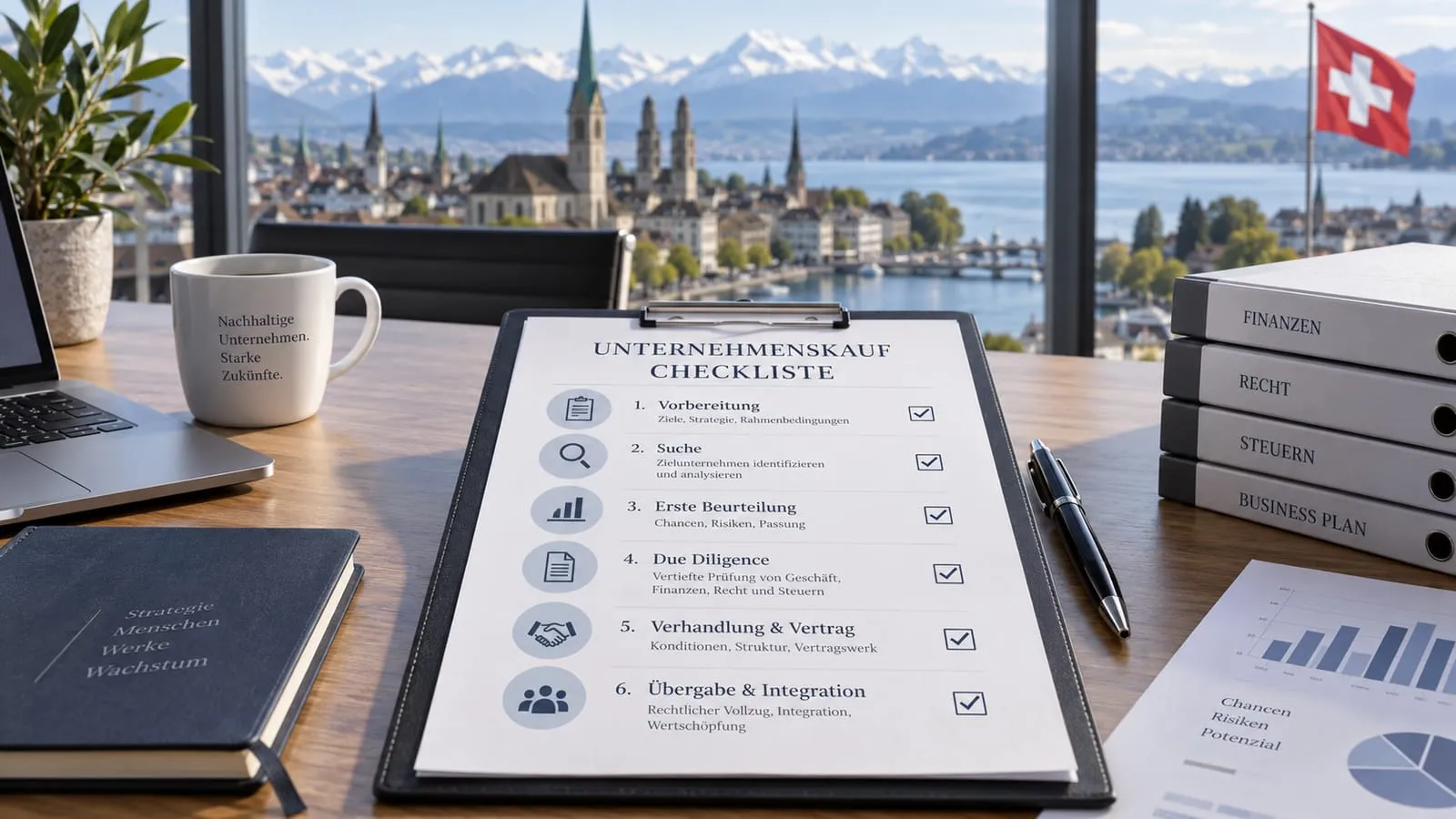
1. Sharpening the buyer profile
Before the search starts, it must be clear what kind of company fits: industry, region, size, earning power, price range and your own role. An operational successor searches differently from an investor or ETA candidate.
2. Opening up the market in a targeted way
Platforms provide an overview. In addition, discreet direct outreach opens up successions that are not yet public. Only the combination really covers the market.
3. Examining figures and substance
Do the revenues recur? Was the profit pushed up with one-off income? How heavily does the business depend on the owner? An experienced adviser asks these questions early, not to talk opportunities down, but to identify real risks.
4. Putting the price into perspective
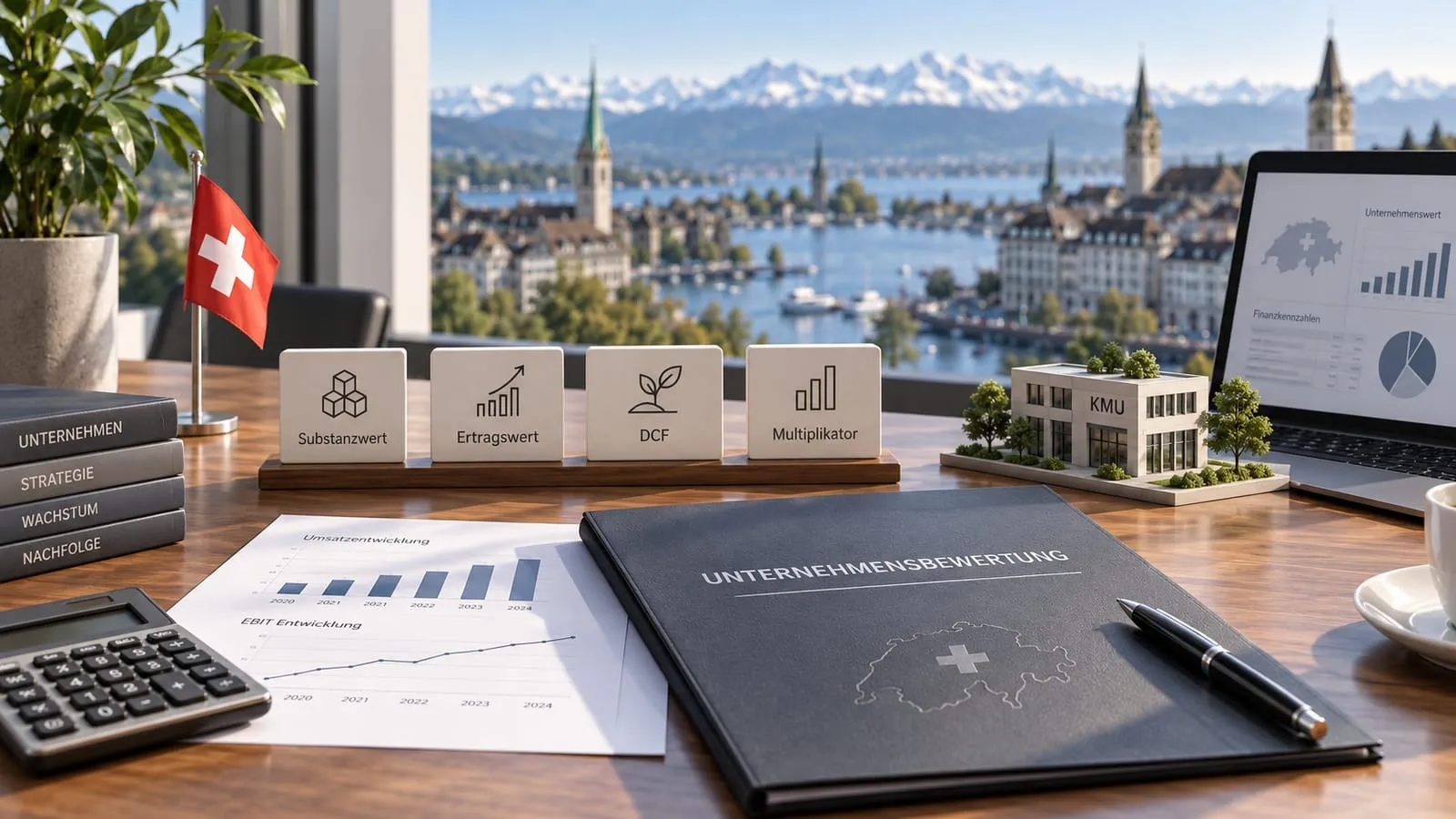
Is the price fair? Only a transparent business valuation shows that. Earnings value, net asset value, multiples or DCF — depending on the case. A valuation does not replace a negotiation, but it shows where assumptions need to be questioned critically.
5. Preparing and leading the due diligence
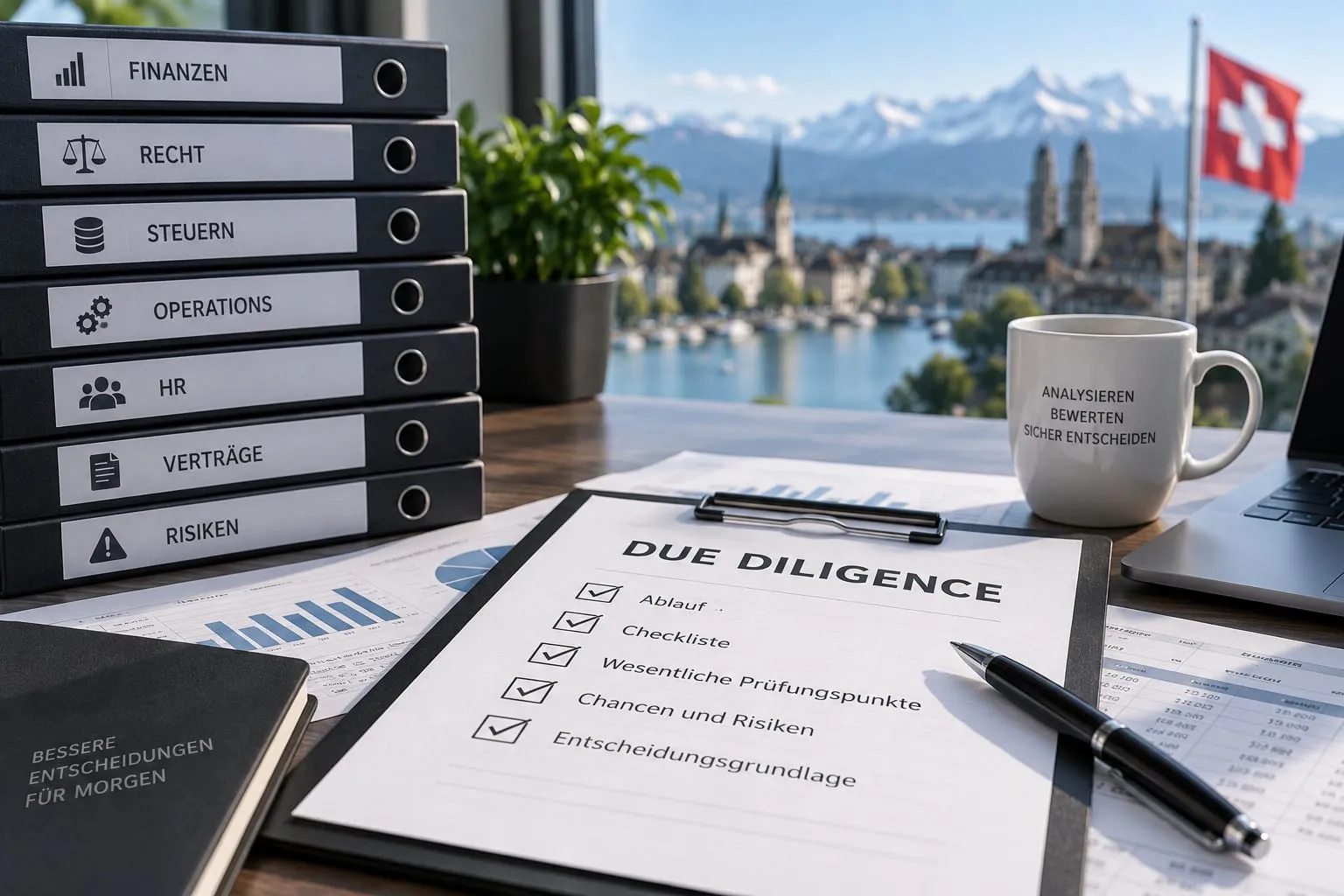
After the LOI, the in-depth examination begins. The due diligence in a business acquisition shows whether all the assumptions really hold. Good advice helps you to request the right documents and to translate findings into negotiating points.
How you recognise a good adviser
- Buyer’s perspective: They assess risks, price and handover from your point of view
- Clear process: Transparent at all times, from the search profile to completion
- Financial experience: Valuation and purchase price logic are explained, not merely asserted
- Legal understanding: Contract structure and warranties are put on the table early
- Network: Specialists in finance, tax and M&A law are available
- Independence: Clarifies early on whether they hold a sell-side mandate or are really on your side
Warning signs when choosing an adviser
Be careful if an adviser pushes you to buy without examining risks. Or if a valuation is justified only with a flat-rate multiple. Anyone mandated by the seller cannot represent the buyer side at the same time. Reputable advice does not create pressure, but confidence in your decision.
Platform, broker or buy-side advisory — what is the difference?
A platform gives a market overview. A broker seeks the best price for the seller. A buy-side advisory first asks what you want as a buyer and accompanies you through search, valuation and negotiation. What a purchase process looks like in concrete terms is shown in our article on buying a business in Switzerland.
How Business Successor supports buyers
Business Successor is deliberately focused on the buyer side. Practical transaction experience combined with expertise in corporate finance, fiduciary services, valuation and M&A law. Our main page on business succession in Switzerland offers the complete overview.
Conclusion: good advice protects against expensive shortcuts
Buying an SME rarely runs in a straight line. If you proceed in a structured way, you end up buying not just any company, but the right one.
You will find the starting point via our business succession in Switzerland overview or directly in a no-obligation initial consultation.