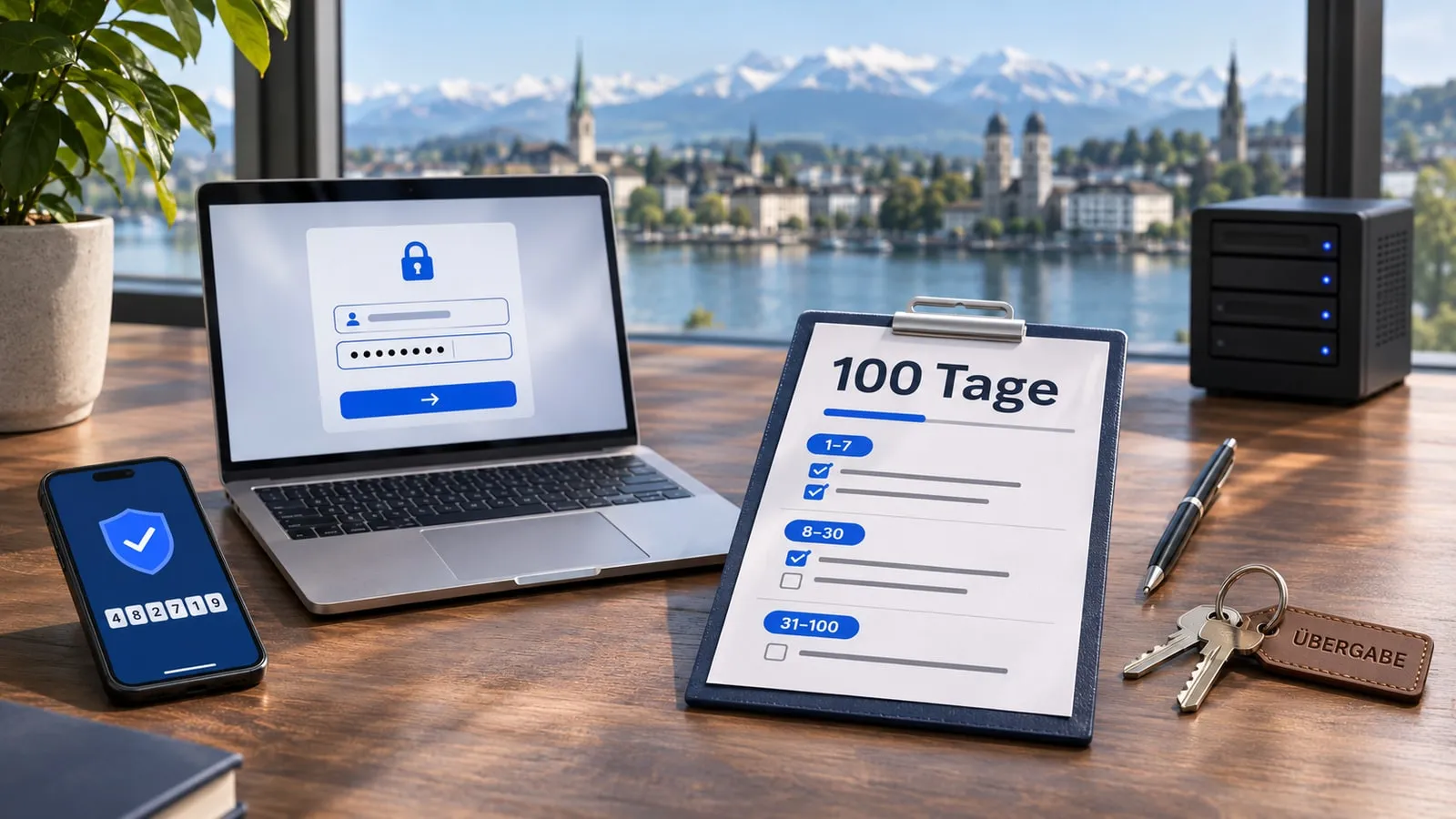
A business acquisition is not a single event, but a process with clearly defined phases. Those who understand the structure reduce uncertainty, save time, and increase the likelihood of closing the deal.
Below is the typical process in the Swiss SME market.
Definition of the search profile
Clarity comes first.
Industry, region, company size, number of employees, the buyer’s role, and investment range must be clearly defined. Without a structured search profile, every opportunity becomes a temptation.
Initial contact and confidentiality
After identifying a target company, initial contact is established. Typically, a confidentiality agreement (NDA) is signed before detailed information is exchanged.
At this stage, the focus is on aligning expectations and assessing the fundamental fit between the parties.
Initial analysis and indicative offer
Based on initial financial information, a preliminary valuation is conducted. This often leads to an indicative offer or a non-binding price range.
At this point, both parties decide whether to proceed to more in-depth discussions.
Letter of Intent
The Letter of Intent defines the key parameters of the transaction. Purchase price logic, structure, timeline, and exclusivity are outlined.
Although usually non-binding from a legal perspective, it sets the framework for the next phase.
Due Diligence
In this phase, financials, contracts, tax matters, employee structure, and risks are examined in detail. The goal is to verify the assumptions made during the initial valuation.
The quality of this phase directly influences the final contract structure.
Contract Negotiation
Based on the due diligence findings, the purchase agreement is drafted. Warranties, liability provisions, purchase price adjustments, seller loans, or earn-out arrangements are defined in detail.
This is where the allocation of risk between buyer and seller is determined.
Signing and Closing
At signing, the contract is formally executed. At closing, ownership is transferred and the purchase price is paid.
Depending on the structure, conditions may need to be fulfilled between signing and closing, such as financing approvals or regulatory clearances.
Conclusion
A business acquisition is not a spontaneous decision, but a clearly structured process.
Those who actively manage and properly document each phase reduce risks, strengthen their negotiation position, and lay the foundation for a successful acquisition.